
ou smell Munnar before you understand it. Get out of the car after that long, winding drive up from Kochi, and there’s woodsmoke somewhere, cardamom being crushed nearby, tea leaves drying somewhere you can’t quite see. Nobody puts that in the brochure. But it’s the first real clue to what Munnar food culture actually is.
Most people come here for the tea gardens. Fair enough they’re stunning. But ask anyone who’s stuck around longer than a two-night package tour, and they’ll tell you the food sneaks up on you too. It’s not one dish. It’s not even one cuisine, really. It’s Tamil plantation workers who never left, Malayali families who settled generations back, tribal communities who were here long before any of them, and a colonial-era tea economy that quietly reshaped what ends up on the plate. Munnar cooks like a place that’s absorbed a lot of people.
Who’s Actually Cooking Here
Here’s the thing about Munnar it’s not an old town with food traditions going back a thousand years. It basically grew up around the tea and cardamom estates the British planted. Workers came up from Tamil Nadu to work those estates, and a lot of them stayed. Their grandkids run the hotels now (in Kerala, “hotel” just means a small eatery, confusingly). Meanwhile the Muthuvan tribal community was already living in these hills, farming millet and foraging, long before any of it.
So when you sit down to eat in Munnar, you’re not getting “Kerala food” in the way people picture it no big banana-leaf sadya spread, necessarily. You’re getting something messier and more interesting. Coconut and curry leaves, sure, that’s non-negotiable in Kerala cooking. But also Tamil-style filter coffee. Also plantation comfort food nobody’s written a cookbook about. Also things the Muthuvans have been eating since before “Munnar” was a name on a map.
Breakfast When It’s Actually Cold
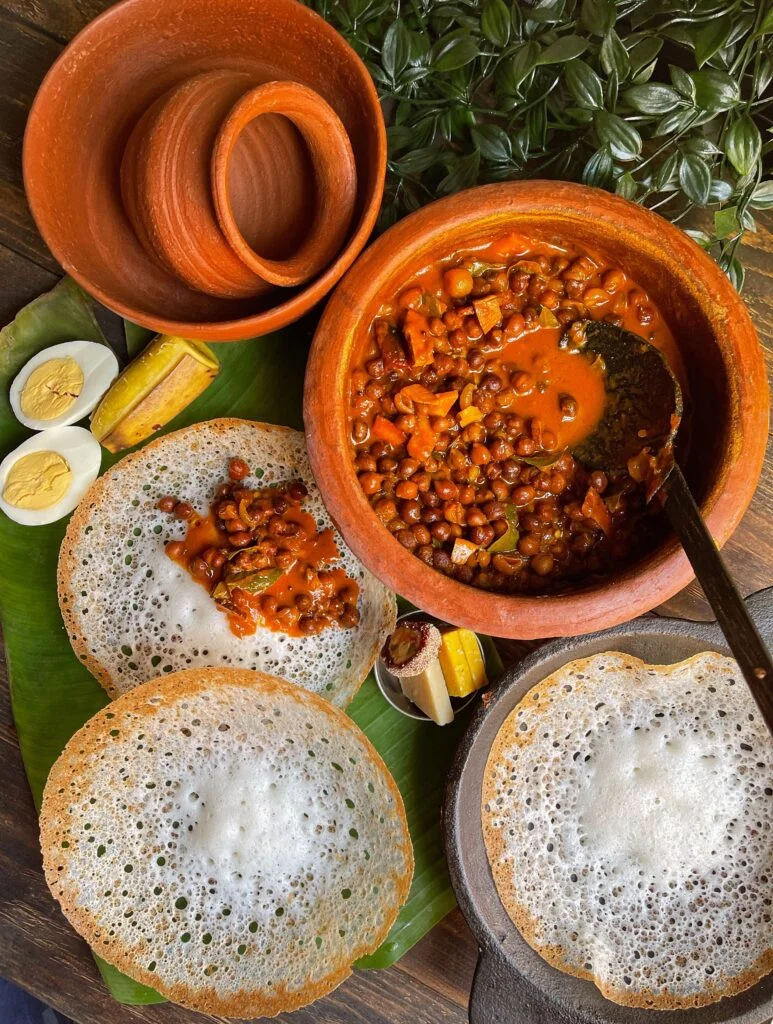
Mornings here are genuinely cold, which still surprises people who think of Kerala as all backwaters and heat. Walk into any small hotel before 9 am and you’ll see stacks of steel plates, appam with those lacy crisp edges, a bowl of stew next to it coconut milk, black pepper, maybe chicken or just vegetables, gentle stuff, exactly what you want when you’re still cold from the night before.
Puttu shows up too. Steamed cylinders of rice flour and coconut, usually with kadala curry, or honestly just with a banana and some sugar if you’re in a hurry. Idiyappam, those steamed rice noodle strings, paired with egg curry more often than not.
What throws visitors off a bit is how much Tamil food is mixed into this. Idli, dosa, sambar completely normal breakfast order in Munnar, sitting right next to the appam and stew, and nobody there thinks it’s odd. Makes sense once you know the history. It’s just what breakfast looks like when half the town’s grandparents came from Tamil Nadu.
The Spice Thing Isn’t Marketing
People throw around “spice capital” for this region and it can sound like tourism copy, but honestly, it’s not exaggerated. The hills around Munnar and toward Kumily grow a huge share of the world’s cardamom. Pepper too. Cloves, cinnamon.
And you taste it. Not in a “this will burn your mouth” way locals will actually correct you if you assume that’s what they mean by spicy. It’s depth, not heat. Whole cardamom pods bruised and tossed into rice. Cinnamon bark simmered slow into a meat curry until the smell fills the whole kitchen. Even something as basic as a thoran grated coconut stir-fried with vegetables tastes different here because the spice going into it was probably ground that morning, not bought pre-packaged from three towns over.
Walk through the spice markets near the main town and it’s not souvenir theatre. Sacks of cardamom, vanilla, cloves bought in bulk by people who cook with this stuff every single day.
Lunch Is Built to Fill You Up
Lunch isn’t fussy here. It’s rice, a curry, maybe two sides, buttermilk to cool your mouth down after. Closer to what a tea estate worker needs to get through an afternoon than the elaborate festival spread people associate with Kerala.
Meat matters more here than it does on the coast, honestly. Kerala beef fry dark, dry, loaded with black pepper and curry leaves is a genuine local favorite, usually eaten with parotta, that flaky layered bread plantation workers have relied on for generations because it’s quick and it fills you up. Mutton curry too, slow-cooked with coconut and roasted spices, especially on weekends.
Fish takes a back seat compared to coastal Kerala, since Munnar’s inland and up in the hills. But it doesn’t disappear freshwater fish, dried fish, brought up from nearby markets. Kerala’s relationship with fish just adjusts to the altitude, it doesn’t quit.
The Food Nobody Writes About: Muthuvan Cooking
Here’s a part of Munnar food culture that almost never makes it into a blog post, honestly, including probably most of the ones you’ve already read. The Muthuvan community has lived in these hills for centuries, long before tea plantations existed, and their food is built around what the forest gives wild greens, tubers, millet, ragi.
It’s simple food, and it’s simple on purpose. Boiled tubers. Millet porridge. Greens with barely any spice, because the point is tasting the ingredient, not covering it up. A few community-run homestays around Munnar have started opening this style of cooking up to visitors, and if you get the chance, take it. It’s a completely different rhythm from the spice-heavy plantation food most tourists eat the whole trip without ever noticing there’s another version of “local food” sitting quietly in the background.
Tea, Obviously But Also Coffee
Can’t write about Munnar without the tea. It’s not just a drink here, it’s the whole reason the town looks the way it does. Locals drink it strong, sweet, sometimes with cardamom or ginger thrown in — sulaimani, if it’s made without milk, a very Tamil-influenced habit.
What actually surprises people is the coffee scene. Small filter coffee stalls, that strong frothy South Indian style poured back and forth between two steel tumblers to cool it you’ll find these just as often as tea stalls in some parts of town. Tamil influence again, showing up in the cup.
Evenings Smell Like Fried Snacks
As the mist rolls in and it gets properly cold, the street food wakes up. Banana fritters, hot bajji dunked in gram-flour batter, peanuts roasted and sold in twisted paper cones. People just stand around the tea stalls with a hot glass of chai, snacking, talking, not really in a hurry to go anywhere.
One thing that’s become weirdly central to Munnar’s food identity lately homemade chocolate. Small shops all over town sell it, often flavored with cardamom or coffee or ginger, which sounds like a tourist gimmick until you realize locals buy it too, not just visitors dragging home souvenirs.
Why Any of This Matters
It’s easy to treat Munnar as scenery with meals attached tea gardens, a viewpoint, a quick lunch, back on the road. But spend a few days actually eating your way through it, and you start noticing the food is carrying its own history. Migration, plantation labor, tribal knowledge nobody bothered writing down for a long time, and a climate that just demands warm, comforting food.
A plate of appam and stew on a foggy morning. Beef fry shared over parotta with people you just met at a homestay. A bowl of millet porridge that’s been cooked more or less the same way for generations. That’s Munnar food culture not a single dish you can put on a postcard, but a place where a lot of different people’s cooking somehow ended up sharing the same table.